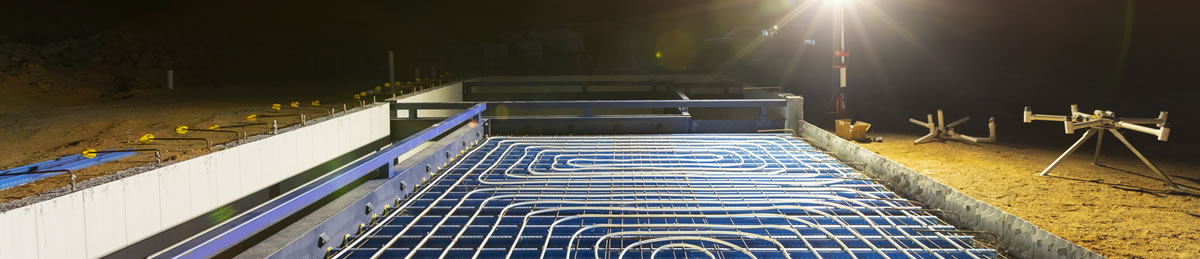
New Homes
Hydronic Design Guidance
Building for efficiency and comfort from the ground up
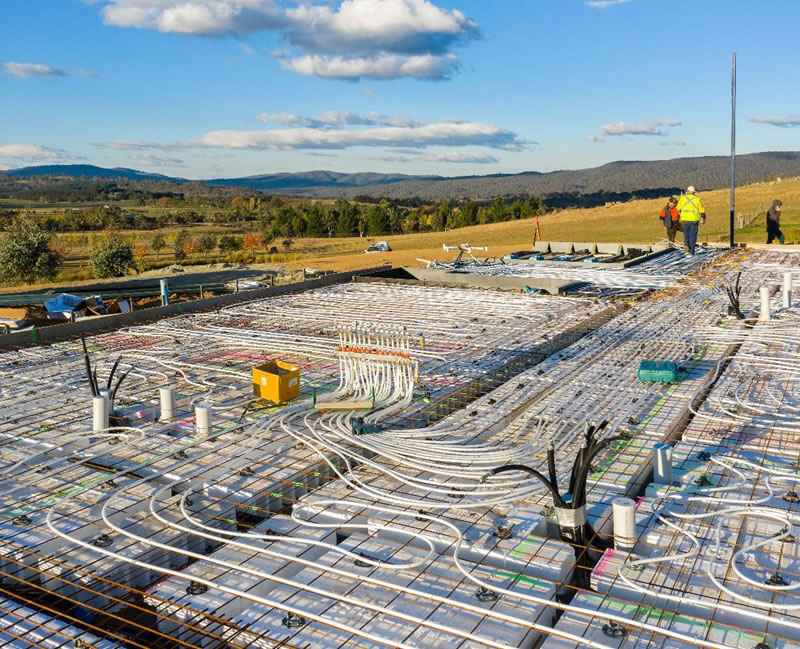
Critical Design Factors
Three principles for a temperate climate home.
1. Orientation
Face towards the Sun. Minimize East and West windows.
Southern Hemisphere: North facing glass. Northern Hemisphere: South facing glass.
2. Insulation
Insulate as much as possible, ideally on the outside of the building envelope to protect the thermal mass. Aim for airtight construction (Passive House principle: < 0.45 air changes/hour).
Consider Heat Recovery Ventilation (HRV) or Energy Recovery Ventilation (ERV) for fresh, filtered air in an airtight home.
3. Thermal Mass
Place thermal mass inside the insulation. Concrete slabs offer tremendous thermal mass, as do internal brick or concrete walls.
"Get this right and heating and cooling any home becomes remarkably simple and straightforward."
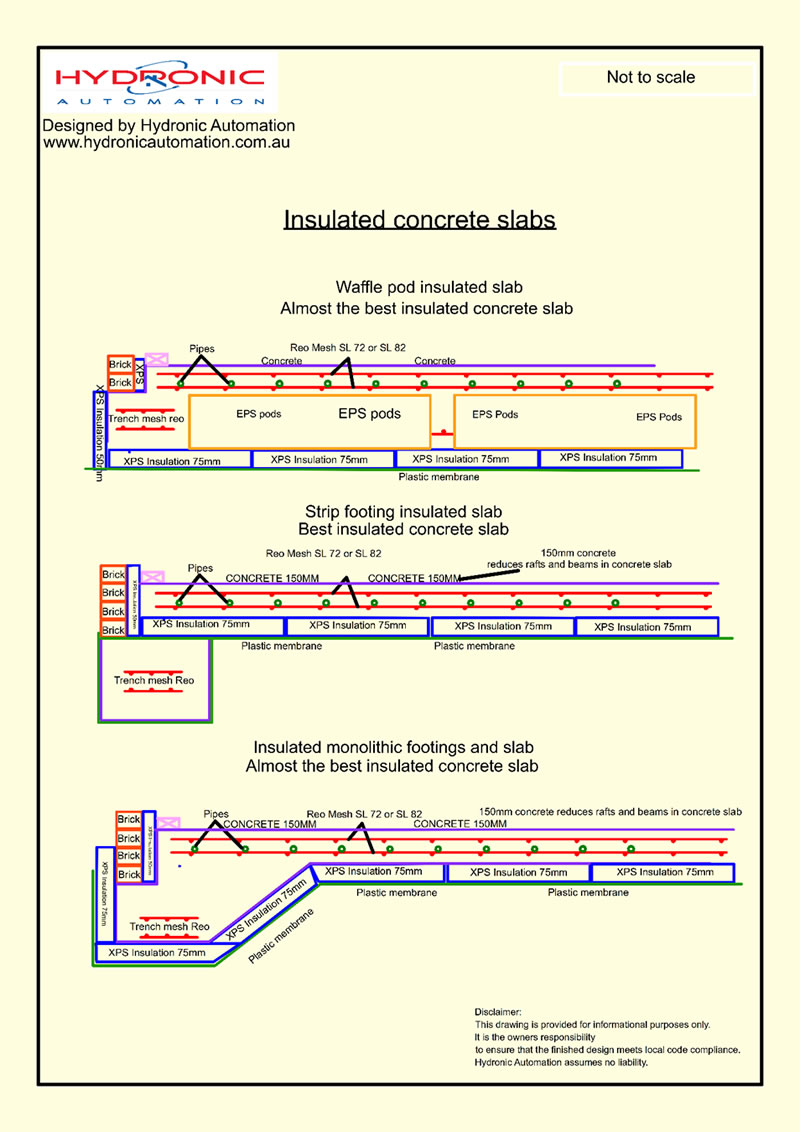
Insulated Concrete Slabs
Critical for In-Slab Heating
An uninsulated slab can increase running costs by 50% or more due to enormous heat loss into the ground.
Heat transfers via conduction through concrete in all directions equally. Without a thermal break between the slab and the ground, you are effectively trying to heat the earth.
Insulation under concrete slabs has been standard for decades in colder climates globally. While required in some Australian climate zones (e.g., Zone 8), it is essential for efficiency everywhere in-slab heating is used.
Check our Gallery for insulated concrete design examples.
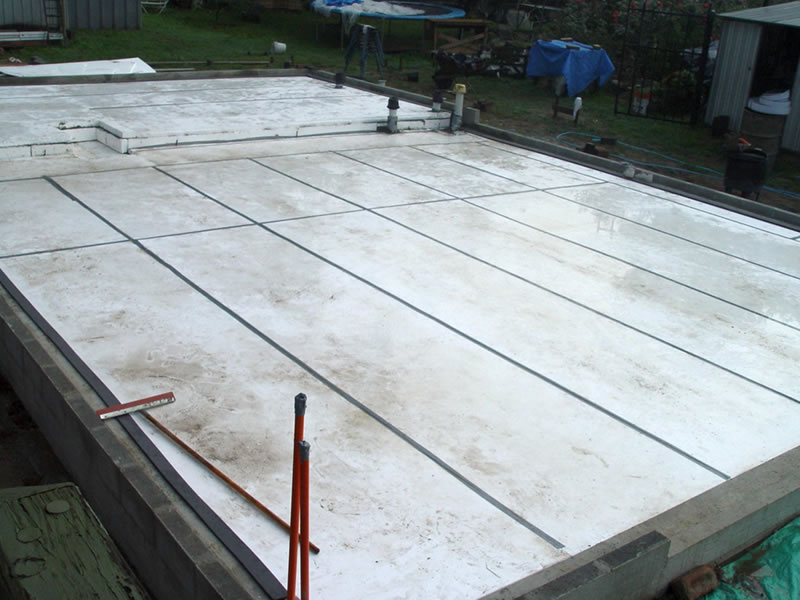
Design Schematics
Detailed guidance for your builder or engineer